
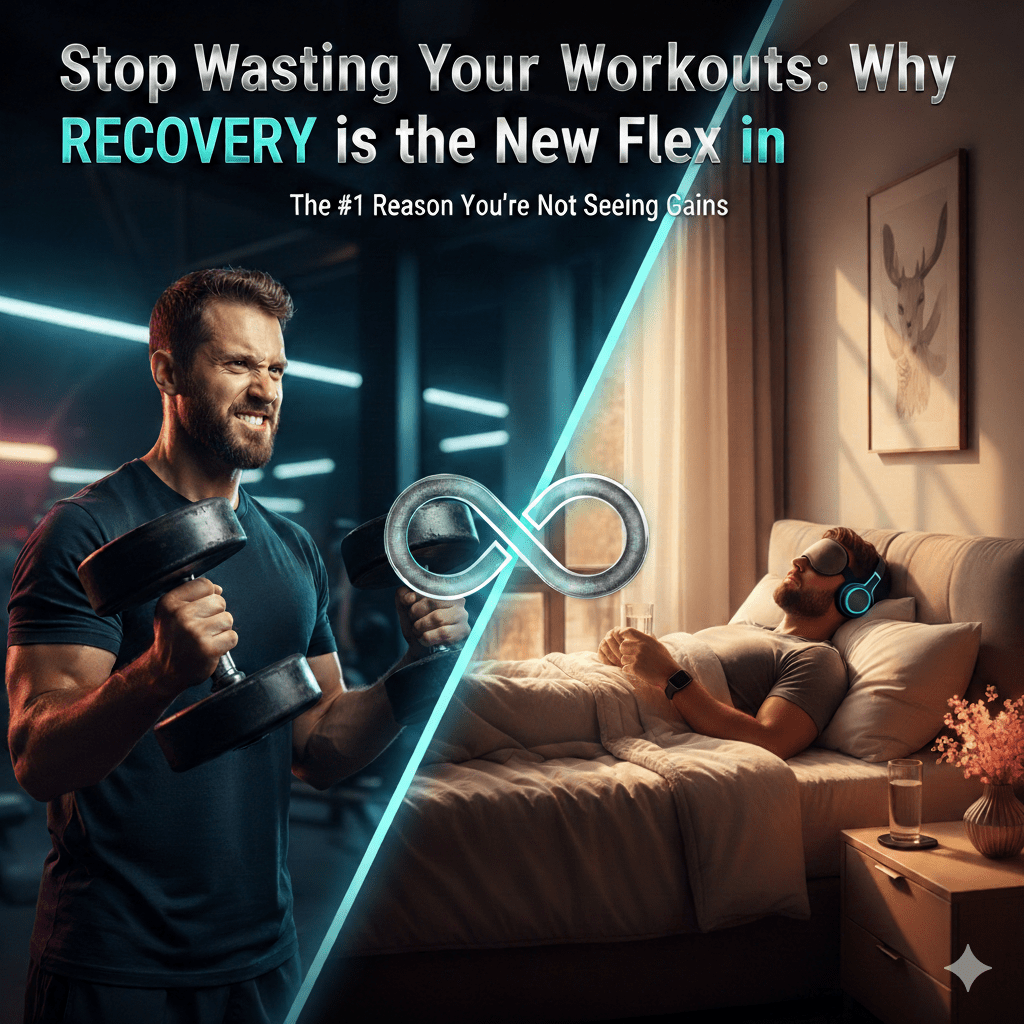
We’ve all been fed the same “hustle culture” fitness lies. You know the vibe: “No days off,” “Rise and grind,” and the idea that if you aren’t leaving the gym in a puddle of your own sweat, you’re failing.
But here’s the reality check your favorite fitness influencer won’t tell you: If you aren’t recovering, your workout is a total waste of time.
Actually, it’s worse than that. If you’re just smashing your body 24/7 without a recovery plan, you aren’t “leveling up”—you’re just speedrunning burnout. In 2026, we’re done with the “more is more” era. It’s time to accept that your recovery matters way more than your reps and sets.
The Science: You Don’t Actually Get Fit in the Gym
Let’s clear up a massive misconception. You don’t build muscle or get faster while you’re lifting weights or hitting the Peloton. In the gym, you’re actually doing the opposite: you’re tearing muscle fibers, spiking your cortisol (the stress hormone), and draining your battery.
You leave the gym weaker than when you walked in.
The “gains” happen during the Adaptation Phase. This is the window where your body repairs that damage and builds itself back slightly better to handle the stress next time.
The Math That Actually Matters:
Stress (The Workout) + Rest (The Recovery) = Results (The Glow-up)
If you cut out the “Rest” part, you’re just left with Stress. And constant stress without progress is just a recipe for a mid-life crisis at age 25.
Stop Doing “Junk Volume”
We’ve all been there: adding an extra three sets of curls just because we feel like we “should,” or staying for an extra 30 minutes of cardio because we ate a pizza last night.
In the fitness world, this is called Junk Volume.
Your body has a “Maximum Recoverable Volume” (MRV)—basically a ceiling on how much stress it can actually handle before it stops caring. Once you hit that ceiling, every extra rep isn’t helping you; it’s just digging a deeper hole. If you’re digging a hole faster than you can fill it back up, you’ll never see the results you’re paying that expensive gym membership for.
The Big Three: How to Actually Recover
Recovery isn’t just “doing nothing.” It’s an active process. If you want to see results, you need to be as disciplined with your downtime as you are with your deadlifts.
1. Sleep is Your Superpower
Sleep is the ultimate biohack. It’s the only time your body goes into full “repair mode,” dumping growth hormone into your system to fix what you broke during the day.
- The Reality: Scrolling TikTok until 2 AM is killing your progress. Even a small sleep deficit makes your body hold onto fat and break down muscle. It’s literally anti-fitness.
2. Nutrition Isn’t Just “Fuel”
Think of your body like a high-end car. You can’t put cheap gas in it and expect it to hit 100 mph.
- Protein: These are your building blocks. No protein, no repair.
- Carbs: This is your energy currency. Stop fearing carbs; they’re what give you the “pop” in your muscles.
- Micros: Magnesium and Vitamin D are the “project managers” of your body. Without them, the repair crew doesn’t know what to do.
3. Nervous System Management
Your brain doesn’t know the difference between “I’m hitting a PR” and “My boss is yelling at me.” It’s all just Stress. If your life is high-stress and your sleep is mid, your Central Nervous System (CNS) is going to be fried. A fried CNS means your strength will tank, your mood will sour, and your workouts will feel like moving through molasses.
Red Flags: Are You Under-Recovering?
If you’re experiencing these, your current workout routine is likely doing more harm than good:
| The Red Flag | What’s Actually Happening |
| The “Plateau” | You haven’t increased your weights in weeks. |
| Tired but Wired | You’re exhausted all day but can’t sleep at night. |
| Constant “Aches” | That weird shoulder pain that just won’t go away. |
| Zero Motivation | You have to drag yourself to the gym every single time. |
The New Flex: Quality Over Quantity
The hardest part of this shift is the mental game. We feel guilty when we aren’t “doing the most.” But the highest-level athletes in the world—the ones with the best physiques and the craziest stats—are obsessed with recovery. They aren’t just training hard; they’re resting hard.
The “Minimum Effective Dose” (MED)
In 2026, the smartest people in the gym are looking for the Minimum Effective Dose.
- If you can get the same muscle growth from 45 minutes as you can from 90, why stay for 90?
- The extra 45 minutes doesn’t make you “tougher”—it just makes you more tired.
By doing just enough to trigger a change, you leave your body with plenty of energy to actually make that change happen.
How to Fix Your Routine Right Now
If you feel like you’re spinning your wheels, try this:
- Listen to your HRV: Use a wearable (Oura, Whoop, Apple Watch) to check your Heart Rate Variability. If your “Ready Score” is low, take a rest day. It’s not “quitting”; it’s being smart.
- Take a “Deload” Week: Every month or two, go to the gym but do half the weight and half the sets. It feels “easy,” but it’s allowing your joints and brain to catch up to your muscles.
- Hydrate like it’s your job: Your muscles are mostly water. If you’re dehydrated, your recovery is basically paused.
The Bottom Line
The gym is just a request for change. Recovery is the approval of that request.
If you aren’t sleeping, eating, and managing your stress, you’re just shouting at your body and wondering why it isn’t listening. Stop making your workouts worthless. Stop obsessing over the 1 hour you spend in the gym and start caring about the other 23 hours you spend out of it.
The person who trains 3 days a week and recovers perfectly will always look and feel better than the person who trains 6 days a week and is perpetually exhausted.
Choose the gains, not the grind.

 Everyday | Athletix
Leave a comment