
In the vast and often confusing landscape of weight management, countless fads and quick fixes promise miraculous results. Yet, time and again, one fundamental nutrient emerges as a consistent and powerful ally: protein. Far from being just for bodybuilders, protein is the unsung hero of sustainable weight loss and maintenance, playing a crucial role in everything from satiety and metabolism to muscle preservation.
The Hidden Deficit: Are You Getting Enough?
Before diving into protein’s benefits, it’s vital to address a silent epidemic: widespread protein deficiency. While severe protein deficiency (kwashiorkor) is rare in developed countries, a significant portion of the population consistently falls short of optimal protein intake for health and weight management. Studies suggest that up to 1 in 3 adults over the age of 50 may not be consuming enough protein, and even younger demographics, particularly those following restrictive diets or with busy lifestyles, can struggle to meet their needs. This “protein gap” can undermine weight loss efforts, making it harder to feel full, maintain muscle, and keep metabolism humming.
Protein: Your Satiety Supercharger
One of protein’s most immediate and impactful benefits for weight management is its remarkable ability to promote satiety. Have you ever noticed how a bowl of cereal leaves you hungry an hour later, while eggs or Greek yogurt keep you feeling full for much longer? That’s the protein effect in action.
Protein slows down digestion, meaning it stays in your stomach for longer, signaling to your brain that you’re full. This translates directly into:
- Reduced overall calorie intake: When you feel satisfied, you’re less likely to snack impulsively or overeat at subsequent meals.
- Fewer cravings: Stable blood sugar levels, a benefit of protein’s slow digestion, help to ward off the sudden dips that trigger intense cravings for sugary or high-carb foods.
- Improved portion control: Feeling fuller naturally leads to consuming smaller portions without feeling deprived.
Boosting Your Metabolism: The Thermic Effect
Beyond satiety, protein plays a unique role in your body’s energy expenditure through what’s known as the thermic effect of food (TEF). This refers to the energy your body uses to digest, absorb, and metabolize nutrients. Protein has a significantly higher TEF than carbohydrates or fats.
Consider this: approximately 20-30% of the calories from protein are burned off during digestion, compared to 5-10% for carbohydrates and 0-3% for fats. This means that by simply eating more protein, you are subtly increasing your daily calorie burn, giving your metabolism a gentle, continuous boost. While not a magic bullet, this consistent increase can add up over time, contributing to a more favorable energy balance for weight loss.
Muscle Preservation: The Foundation of a Lean Body
When you’re trying to lose weight, you want to shed fat, not precious muscle. Unfortunately, calorie-restricted diets often lead to muscle loss alongside fat loss, which is counterproductive for long-term weight management. Muscle is metabolically active tissue, meaning it burns more calories at rest than fat does. Losing muscle can therefore slow down your metabolism, making it harder to keep the weight off in the future.
This is where protein shines. Adequate protein intake, especially when combined with resistance training, is crucial for preserving lean muscle mass during a calorie deficit. Protein provides the amino acids (the building blocks of muscle) necessary for muscle repair and synthesis. By protecting your muscle mass, protein helps to:
- Maintain a higher resting metabolic rate: More muscle means more calories burned, even when you’re just sitting still.
- Improve body composition: A higher muscle-to-fat ratio results in a leaner, more toned physique.
- Enhance physical strength and function: Stronger muscles support overall health and make daily activities easier.
How Much Protein Do You Need?
The “optimal” protein intake varies based on individual factors like age, activity level, and weight management goals. However, general recommendations often fall within the range of 0.8 to 1.6 grams of protein per kilogram of body weight (or roughly 0.36 to 0.73 grams per pound) for adults seeking to maintain a healthy weight. For those actively trying to lose weight, particularly while exercising, aiming for the higher end of this spectrum, or even slightly above, can be beneficial for satiety and muscle preservation.
Distributing your protein intake throughout the day, rather than consuming it all in one meal, is also highly effective. Aim for 20-30 grams of protein per meal to maximize muscle protein synthesis and satiety.
Incorporating More Protein into Your Diet
Boosting your protein intake doesn’t have to be complicated. Here are some simple strategies:
- Prioritize protein at breakfast: Start your day strong with eggs, Greek yogurt, cottage cheese, or a protein smoothie.
- Include a lean protein source with every meal: Think chicken breast, fish, lean beef, tofu, lentils, or beans.
- Smart snacking: Choose protein-rich snacks like nuts, seeds, hard-boiled eggs, or a small handful of cheese.
- Explore plant-based proteins: Lentils, chickpeas, black beans, quinoa, edamame, and tempeh are excellent sources.
- Consider protein supplements: While whole foods are always best, protein powder can be a convenient way to boost intake, especially post-workout or for busy individuals.
The Bottom Line: Beyond the Scale
While the number on the scale is often the focus of weight loss efforts, truly sustainable weight management is about so much more. It’s about feeling energized, satisfied, and strong. Protein empowers you to achieve these goals by curbing hunger, boosting metabolism, and preserving muscle.
By making protein a cornerstone of your diet, you’re not just adopting another diet trend; you’re building a foundation for a healthier, leaner body and a more vibrant life. Start paying attention to your protein intake today, and unlock the power of this essential nutrient for your weight management journey.
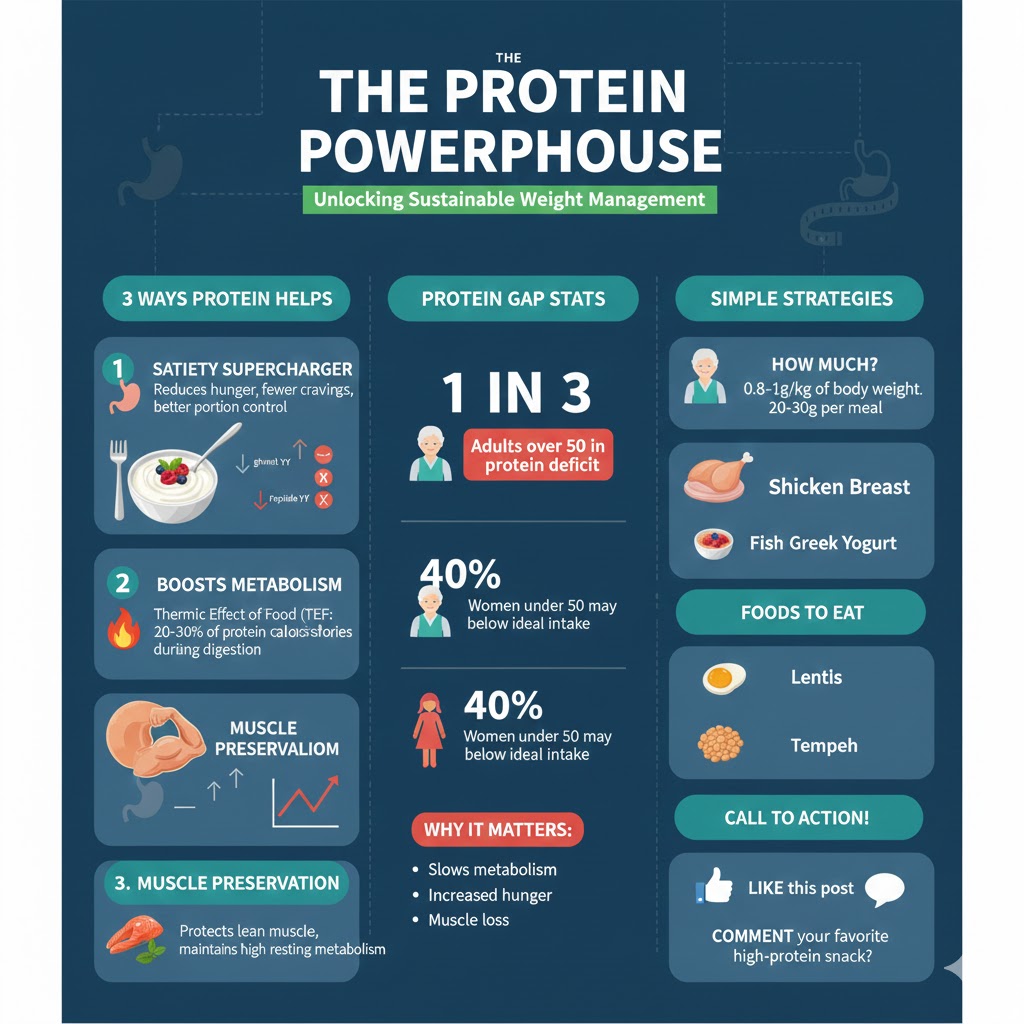
We want to hear from you!
- Like this post if you found these tips helpful for your fitness journey!
- Drop a comment below: What is your favorite high-protein snack that keeps you full throughout the day? Let’s share some recipe inspiration!

 Everyday | Athletix
Leave a comment